| Clock | Odometer | Miles | Hours | mph | |
|---|---|---|---|---|---|
| Richmond MO | 06:57 | 64053 | – | – | – |
| Junction City KS | 10:09 | 64246 | 193 | 3.20 | 60.3 |
| Oakley KS | 13:43 | 64457 | 211 | 3.57 | 59.1 |
| Watkins CO | 16:35 | 64678 | 221 | 3.87 | 57.1 |
| Denver CO | 16:53 | 64693 | 15 | 0.30 | 50.0 |
5 The long days
5.1 One route, a hundred miles
We live in Hawaii, so we don’t do much long distance driving. That is the first thing to say, and everything in this chapter follows from it.
For years our mainland driving was a single route. Los Angeles airport to Lake San Marcos, from the counter where we picked up the rental car to my mother’s parking spot, and it was exactly a hundred miles each way. That was the long drive. By mainland standards it isn’t one.
So when we bought TwoRed and decided to take it across the country, we did not know how far we could drive in a day. We had no relevant experience to draw on. It sounds like a small thing to be missing and it isn’t, because every other decision hangs off it: where you’ll be tonight, how many nights the crossing takes, whether the meeting at the far end is reachable at all.
I looked for guidance where you’d expect to find it, in the Smart car discussions online, and it wasn’t much use. The long trips people reported were nearly always driven by two drivers sharing the wheel, and there was usually a destination that justified an enormous day on the road. That wasn’t going to be us. One driver. A very long way to the far end. And two rules I wasn’t going to bend: no night driving, and no rush hour in a city I didn’t know.
We had to learn on the fly.
5.2 About three hundred miles
Here is what we learned, and the striking thing about it is how quickly it stopped changing.
137 legs in the record have both ends of the odometer on them. The middle one is 305 miles. That is the day: out after breakfast, somewhere by mid-afternoon, still a person at dinner. In the early years the destination usually wasn’t set when we left in the morning. It emerged. About three hundred miles is where it kept landing.
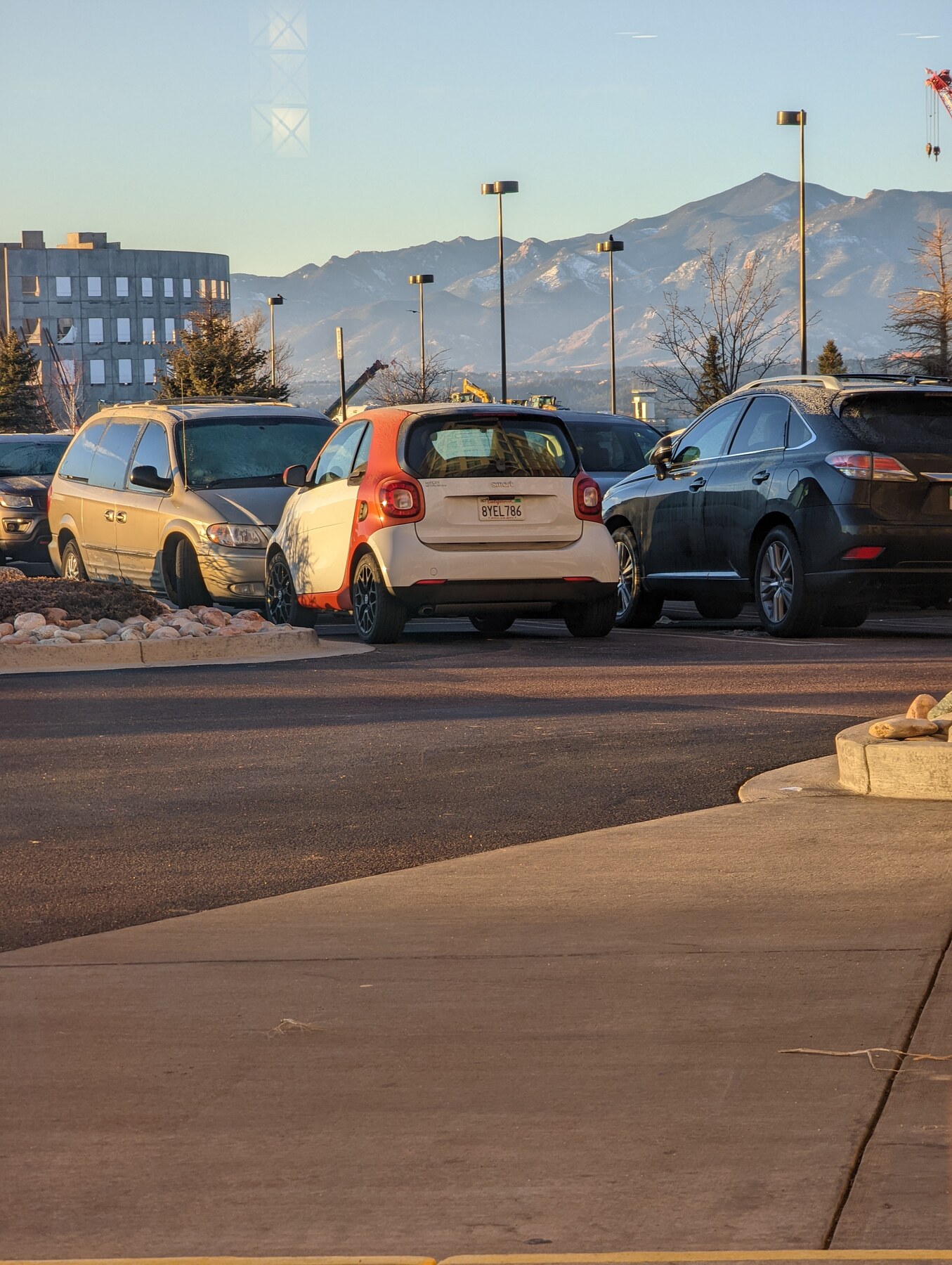
The obvious guess is that the days grew as we got better at it. They didn’t.
| legs | median | |
|---|---|---|
| the first three logged trips | 28 | 301 miles |
| everything after | 109 | 305 miles |
Four miles apart across six years, and a rank test puts them at p = 0.44, which is to say the record cannot tell the two apart at all. The trip-by-trip medians wander between 132 and 360, and the low ones are the short local trips rather than the early ones.
So the calibration happened before the log did. The first crossing was in the autumn of 2010 and it has no trip log at all. The log opens in May 2011, and it opens already knowing the answer. It isn’t a record of learning. It’s a record of a settled habit, kept for six years.
The other two rules are in the record too, and neither of them was ever written on a sheet.
| Median departure | 08:11 |
| Latest departure in six years | 13:26 |
| Median arrival | 16:12 |
| Ninth in ten arrive before | 18:55 |
134 legs carry an arrival time and only 6 of them arrive after eight in the evening. Three of those 6 are in Alaska and the Yukon in August, where eight in the evening is broad daylight and the rule isn’t being broken. One is a ferry terminal with a boat to catch. One is a stop with friends in Las Vegas. One is the night I was driving to my mother. A rule nobody recorded is sitting in the distribution anyway.
There was a fourth thing holding the day together, and it wasn’t in the car.
A great deal of this driving was solo, with me on the road and Nancy in Honolulu at work. She could see where I was, because by then you could follow another person on a map. As the day began to show its limits she would scout ahead on the internet, find somewhere to stay, book it, and then find a restaurant within walking distance of it. The end of the day was chosen from two and a half thousand miles away, while I was still driving toward it. I could put my attention on the road and know there was a good stop coming. Later, when Nancy was always along, the pattern didn’t change: she’d judge how much farther we had in us and book it from the passenger seat.
That is not navigation. Navigation works inside the drive. This worked ahead of it, and it worked when she wasn’t in the car at all. The word for it is logistics, and there is no column on the sheet for the person doing it.
Three hundred miles, then, is not a fact about a Smart car or about me. It’s what falls out of one driver, a long way to go, no darkness, no strange rush hour, and a room somebody has to be able to book. Change the constraints and you get a different number, which is exactly what the two-driver crossings in those forums were reporting. Ours is the measure this chapter needs, because every day that follows is a day one of those five things was set aside.
5.3 Six hundred and forty miles
The longest day in sixteen years starts in my brother’s driveway.
He lives in Richmond, Missouri, and the day before this one is a short one, 195 miles from St Peters, because a short day was all that was needed to get there. Then a visit. Then the rest of Missouri, and Kansas, and the part of Colorado that leads up to the Rockies.
640 miles, out at 06:57 and in at 16:53. The clock says 10.93 hours, and it’s lying by an hour in my favour, because somewhere out past Oakley the time zone changes and I got the hour back. 58.6 miles an hour gross, which is the fastest sustained day in the record and isn’t close. Against a 305-mile norm it is more than two ordinary days run together.
The record can show you how it was done, because I bought fuel three times.
Three segments, three independent stretches of road, and they run at 57.1, 59.1 and 60.3 miles an hour. That’s not a car being pushed. That’s a car being left alone on I-70 across Kansas, which is the fastest road anywhere in this book.
And here’s the part the numbers can’t reach. I wasn’t driving toward Denver. There aren’t a lot of interesting places to stop between Richmond and the Front Range, and I just wanted to get over that section of highway. What I was driving toward was the other side of it. I-70 through the Colorado mountains is one of the most beautiful drives in the United States, and what I wanted was to be back on roads that wind through mountain valleys, often alongside the Colorado River. Mount Evans was on the list for the next morning, and I had some hope for it, but it wasn’t the motivation. The mountain has since been renamed Mount Blue Sky, which is a better name for a thing I’d been trying to reach for six years.
So the longest day in the record is a day I drove in order to get it over with. Six hundred and forty miles is what impatience looks like when it’s written down.
5.4 The rest of the exceptions
11 legs are 471 miles or more.
| # | Date | From | To | Miles | Out | In | Gross mph | |
|---|---|---|---|---|---|---|---|---|
| 125 | 1 | 19 Jun 2016 | Richmond MO | Denver CO | 640 | 06:57 | 16:53 | 58.6 |
| 98 | 2 | 07 Jul 2015 | Carlsbad CA | Sedona AZ | 575 | 04:05 | 18:34 | – |
| 137 | 3 | 06 Jan 2017 | Brookings OR | Paso Robles CA | 562 | 08:31 | 22:10 | 41.2 |
| 84 | 4 | 29 May 2014 | Sydney NS | Edmundston NB | 555 | 07:37 | 18:14 | 52.3 |
| 69 | 5 | 05 May 2014 | El Paso TX | San Antonio TX | 531 | 05:39 | 17:48 | 47.6 |
| 29 | 6 | 31 May 2012 | St Louis MO | Columbus OH | 518 | 06:03 | 18:41 | 44.5 |
| 22 | 7 | 24 May 2012 | Lake San Marcos CA | St George UT | 492 | 06:03 | 21:36 | 33.8 |
| 60 | 8 | 31 Aug 2013 | Bellingham WA | Grants Pass OR | 488 | 06:49 | 20:18 | 36.2 |
| 48 | 9 | 04 Aug 2013 | Lake San Marcos CA | Carson City NV | 487 | 07:45 | 18:22 | 45.9 |
| 70 | 10 | 06 May 2014 | San Antonio TX | Gonzales LA | 473 | 05:35 | 15:48 | 46.3 |
| 96 | 11 | 11 Jun 2014 | Susanville CA | Lancaster CA | 471 | 07:44 | 18:40 | 43.1 |
Then there’s this one, which belongs in the chapter and would never make the table.
26 June 2011. Flagstaff to Holbrook, 100 miles, out at 04:30. My nephew was a naturalist at Petrified Forest National Park and I wanted a tour of the place that day. The early start gave me the hours I needed. It’s a hundred miles, and it is unquestionably one of the long days, because a long day is measured from when you got up, not from the odometer.
The sheet has a column for distance and a column for time. It doesn’t have one for why.
5.5 Nobody drove a long day in order to drive a long way
I remember all of them. That surprised me when I was first shown the list, and then it stopped surprising me, because not one of these days was about the driving. Every single one has a cause outside the car, and the causes are almost embarrassingly ordinary.
A wrong turn. 31 May 2012, St Louis to Columbus, 518 miles. I’d picked up a friend in St Louis and we were going to a scientific meeting together, with a dinner scheduled at his assistant’s house in Columbus at the end of it. I asked him to navigate. We had a great deal to talk about and neither of us paid much attention to the travel details, and when I got off the freeway for fuel I discovered we were in Urbana, Illinois, which wasn’t on our route. About a hundred miles of backtracking. We got to dinner late, but there were fireflies out, so eating outside in the dark was fine. I took over the navigation the next day.
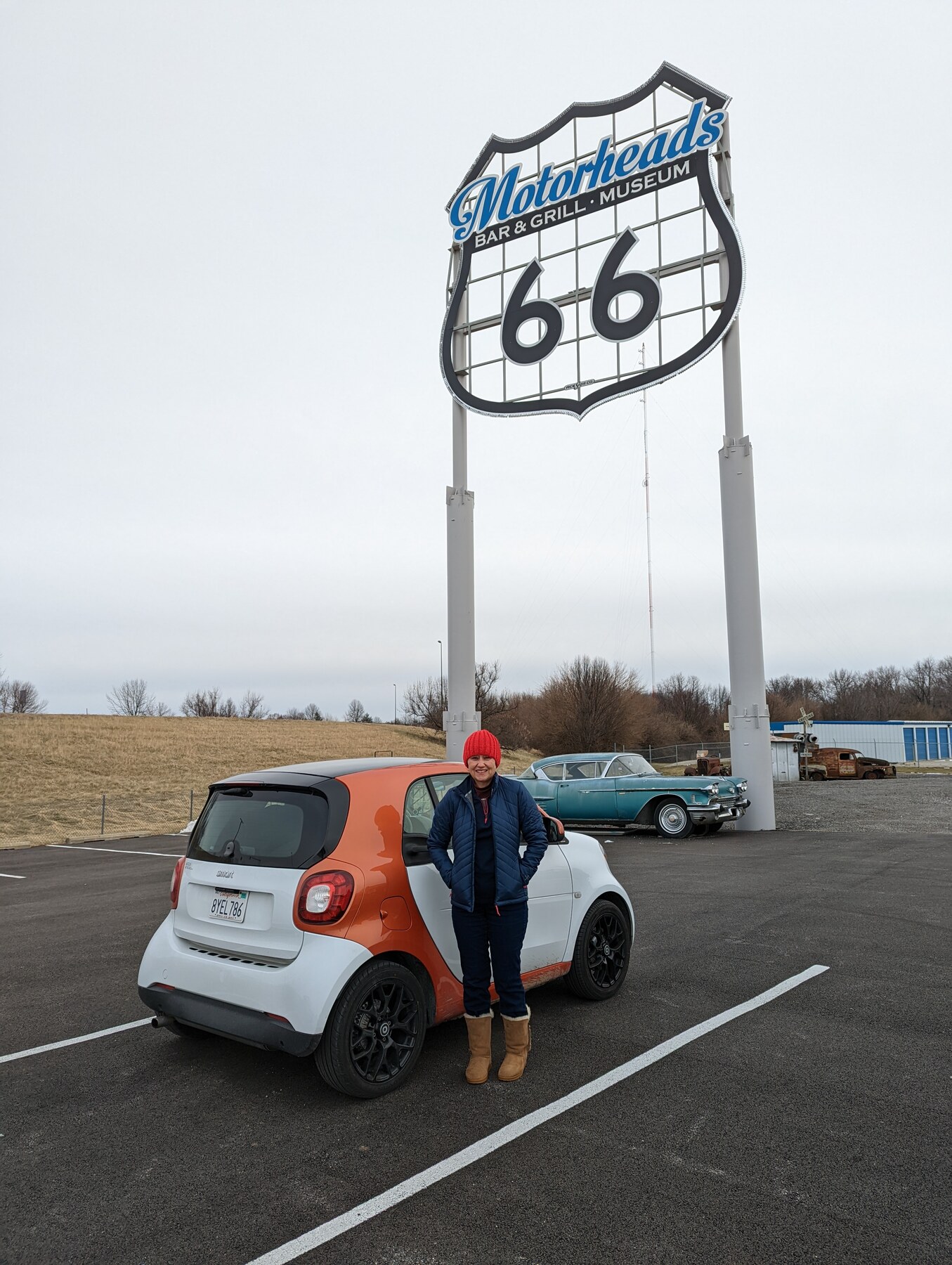
Nowhere to stop. 14 June 2012, Billings to Pocatello, 449 miles at 65.5 miles an hour gross, the fastest day in the record by that measure. Familiar countryside, and frankly not very interesting. There aren’t many places to stay between those two cities other than truck stop motels, and I wanted to be positioned for the next day. An efficient straight run on good freeway. Going fast was pretty easy.
A ferry that did the packing. 29 May 2014, Sydney, Nova Scotia to Edmundston, New Brunswick, 555 miles. We came off the overnight ferry from Newfoundland with the car already loaded, which is the whole reason the day worked: no packing, so an early start. We wanted to be in position for Quebec the next day, so we pushed on to Edmundston even though it was a really long day.
Friends in the middle. 24 May 2012, Lake San Marcos to St George, 492 miles in 14.55 hours, which is 33.8 miles an hour and the slowest big day here. Las Vegas is between the two and we have friends there. We stopped, spent time with them, and pushed on later in the day. The highway from Las Vegas to St George isn’t challenging, and that’s what made it practical to finish.
A state I still needed. 05 May 2014, El Paso to San Antonio, 531 miles. This was the trip where I meant to finish all forty-nine mainland states, and Florida was one of the ones left, so the whole route went south. I’d crossed Texas through the middle before, by Fort Worth and Dallas; this time it was San Antonio and Houston. There wasn’t much between El Paso and San Antonio that I wanted to stop for and I had a meeting in Cherokee, North Carolina waiting at the other end. It was a long day because Florida was a long way and I’d decided it was going to happen.
Smoke. 04 August 2013, Lake San Marcos to Carson City, 487 miles, the first day of the Arctic expedition. I meant to stop well short of Carson City. There were fires raging in the mountains that summer and the smoke lay over Highway 395 all the way up the east side of the Sierras, and I couldn’t stay in it. The record agrees with that without being asked: the two fills that day are at Kramer Junction and Bridgeport, both of them 395 towns, and the second one is at 16:34 with 77 miles still to run. I fueled in the smoke and kept going. It was the smoke that set the mileage on that day, not me.
My mother. 06 January 2017, Brookings to Paso Robles, 562 miles, in at 22:10. She had just turned 104 and word came that she was having problems. I took the next flight to the mainland, picked the car up in Eugene where it was living at a friend’s house, and drove as far as I could on a red-eye’s worth of sleep, which got me to Brookings. The next day I meant to stop in Santa Rosa. The rain there was heavy enough that it looked like flooding, and I had to get to Southern California, so the logic became simple: get far enough south that one more day would finish it. I aimed at San Luis Obispo and quit a little short, because driving at night in that rain was very tiring. It was fine. I got to San Marcos the next day and had time with my mother before she died.
Read them together and the pattern is hard to miss. A brother, a wrong turn, an empty stretch of Montana, a ferry, some friends in Las Vegas, a state, a fire, and a mother at 104. The long days are the days something else was in charge.
5.6 The day inside the day
One of them argues with me, and it took a fill time to find out where.
31 August 2013, Bellingham to Grants Pass, 488 miles. Nancy decided to surprise me. She took a red-eye from Honolulu to Seattle, got on the train north, and timed it to meet me at the dock as I came off the Alaska ferry at the end of the Arctic run. When we met up it was early afternoon. She told me she had reservations in Grants Pass. I pointed out that Grants Pass was a very long way away. That was fine with her, she said, because she had another long drive planned for the day after, all the way to San Francisco so she could fly home. Two big driving days, and I found out about both of them standing on a dock.
My memory of that day is that we started fairly late. The sheet says we started at 06:49. Both of those can’t be true, and until this week there was nothing to put between them, because the fill times for the whole Alaska trip had never been transcribed off the scans.
They have been now.
| Clock | Odometer | Miles | Hours | mph | |
|---|---|---|---|---|---|
| Bellingham WA | 06:49 | 38285 | – | – | – |
| Lakewood WA | 12:52 | 38407 | 122 | 6.05 | 20.2 |
| Rice Hill OR | 18:36 | 38683 | 276 | 5.73 | 48.2 |
| Grants Pass OR | 20:18 | 38773 | 90 | 1.70 | 52.9 |
The first 122 miles took 6.05 hours. The rest of the day ran at 48.2 and 52.9.
That’s about four hours unaccounted for between Bellingham and Tacoma, and four hours is roughly what it takes for a ferry to dock and unload, a train from Seattle to arrive, two people to find each other, and one of them to be told where they’re sleeping. The sheet recorded when the car came off the boat. I remember when the driving started. Neither of us was wrong, and the gap between us is exactly the size of the morning.
I remember the drive as being particularly enjoyable, which for 488 miles on someone else’s reservation is a generous thing for me to say. Having Nancy along made it work. We had four weeks of Alaska to talk about.
5.7 The slowest miles in the record
A day can also be long because you’re barely moving.
07 July 2015, Carlsbad to Sedona, 575 miles, out at 04:05. That’s the earliest departure in sixteen years. Carlsbad is next door to Lake San Marcos, so I was effectively leaving from home, and the plan was to meet a friend partway, I believe at Phoenix, and caravan to his house in Sedona.
The plan mostly worked. Near the end, close to Sedona, he picked a route meant to give me a good view of where we were going, and getting to his house from there meant a long stretch of unpaved road. He was in a four-wheel drive with real ground clearance. I was in a Smart car. I crept along at less than a mile an hour, weaving around huge rocks, with no way to turn back, although I would have if I could. It was exceedingly risky. Getting stuck out there was entirely possible. I made it, and I told myself, and I told TwoRed, never to do anything like that again.
Otherwise a nice visit. Vistas worth seeing.
That day is why the end odometer for the leg was never written down, and why the 575 is my own figure rather than the car’s. It’s also the second-longest day in the book, and part of it was driven at walking pace with the driver certain he had made a mistake.
For comparison, the slowest full day the odometer does have is the return from Coldfoot on the Dalton Highway: 298 miles in 13.18 hours, 22.6 miles an hour gross, on gravel, in 38 degrees at the start. Gravel costs about six miles an hour. Rocks cost forty.
5.8 What the column can’t hold
The sheet has a column for the start time, a column for the end time, and a column for the miles between them. From all three you can work out that a day was long. You can work out, decades later, that a car went 640 miles across Kansas, or that it sat still for four hours in Bellingham, or that somewhere near Sedona it stopped behaving like a car on a road.
What no column holds is that the Kansas day was bought so the Colorado day could happen. I drove six hundred and forty miles to get a stretch of country behind me, and the next morning I went up the highest paved road in the country, and neither of those facts is written anywhere on the sheet. One of them is a number I can still recover. The other one is only mine.
And none of it holds the thing that made every ordinary day work either: somebody a long way off, watching a dot move across a map, deciding where it should stop.
That’s the trade this record keeps making. It kept the miles and let the reasons go, and it kept them so well that fifteen years later the miles can still find the reasons, one at a time, as long as somebody is around to be asked.